 발전기금
발전기금



-
- Systems Security 연구실 (SSLAB) - 이호준 교수님
-
- Software Engineering 연구실 - 이은석 교수님
-
- 컴퓨터시스템 Lab - 정진규 교수님
-
- Info Lab - 타메르 교수님
-
- 타메르
- 27425A
- 031-290-7968
- http:// infolab.skku.edu
Info Lab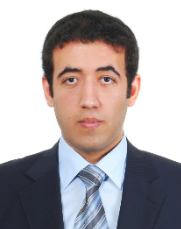
(타메르 교수님)
주요 연구 분야 및 최근 3년간 실적
주요 연구 분야Info Lab (In4Lab) is a part of the College of Computing, Sungkyunkwan University (SKKU), and members of the Lab are leading research activities in several areas of biomedical and information security.Our research work concentrates on computer security topics: user identification, authentication, hardening systems, malware, integrating AI for security tasks, robust machine learning, and adversarial machine learning. We are also actively engaged on several topics in biomedical research, including disease research, for a better understanding of the disease’s pathological causes and syndromes. Topics in biomedical research include brain neurodegenerative diseases detection and progression, intensive care unit, explainable deep learning and multi-modal architectures for biomedical problems, and GANs for medical images synthesis. The mission of the in4Lab is to progressively contribute to the fields of information security and biomedical fields through research and teaching.
최근 3년간 실적
None
현재 진행 중인 연구과제
As we collaborate widely with other researchers locally and globally to solve research problems related to information security and biomedical topics, we are also welcome new researchers and students interested in joining our team at In4Lab. Currently, we are engaged in the following funded projects.
- Intelligent and robust clinical decision support system for Alzheimer's disease.
- Artificial Intelligent-based skin analysis algorithms.
- Software authorship identification based on deep learning.
- Practical mobile continuous authentication
향후 전망 및 진출 가능한 진로향후 전망
In4Lab research activities generally strengthen skills and knowledge related to data analysis, machine learning and deep learning modeling, statistical analysis, technical writing, and presentation. These skills are well-acknowledged by industry (companies) and academia. Prospective career path includes data science analyst, biomedical scientist, security professional, security scientist, forensic scientist, information security analyst.
진출 가능한 진로
필요 이수 과목 및 지식
- Since most of the research work at In4Lab requires programming skills to implement prototypes, solutions, or simulations, it is important to know well one or more programming languages (ex. Python, Java, C++/C languages)
- Computer security course is essential for security-related research.
- Fundamental knowledge about machine learning and deep learning are important for security and biomedical research
-
- Human-AI Interaction Lab - 송하연 교수님
-
- 송하연
- 서울국제관
- http://hailab.skku.edu
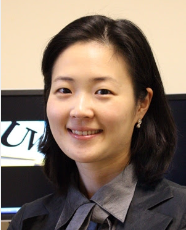 송하연 교수님
주요 연구 분야 및 최근 3년간 실적[ 주요 연구 분야 ]
- Human-Computer Interaction, Human-AI Interaction
- 미디어의 심리적 효과
- AI 에이전트를 어떻게 디자인 하면 사람들이 더 신뢰하고 사람같다고 느끼고 더 좋아할까
[최근 3년간 실적]
저서
- Kim, J. & Song, H. (Eds.). (2020). Technology and health: Promoting attitude and behavior change. San Diego: Elsevier.
저널 페이퍼
- Taenyun Kim and Hayeon Song. How should intelligent agents apologize to restore trust?: Interaction effects between anthropomorphism and apology attribution on trust repair. Telematics and Informatics 61:101596, 2021
- Hayeon Song, Taenyun Kim, Jieun Kim, Dohyun Ahn, and Youngcheol Kang. Effectiveness of VR crane training with Head-Mounted Display: Double mediation of presence and perceived usefulness. Automation in Construction 122:103506, 2021
- Hayeon Song, Jieun Kim, and Taenyun Kim. Artificial intelligence and health communication. Journal of Communication Research, 57(3):196–238, 2020
- Hee Jin Kim and Hayeon Song. Effort justification for fun activities?: The effect of location-based mobile coupons using games. Journal of Retailing and Consumer Services, 54:102029, 2020
컨퍼런스 페이퍼
- Jieun Kim, Woochan Kim, Jungwoo Nam and Hayeon Song. I Can Feel Your Empathic Voice': Effects of Nonverbal Vocal Cues in Voice User Interface. In Extended Abstracts of the 2020 CHI Conference on Human Factors in Computing Systems, pages 1–8, 2020
- Taenyun Kim and Hayeon Song. The effect of message framing and timing on the acceptance of artificial intelligence’s suggestion. In Extended Abstracts of the 2020 CHI Conference on Human Factors