우사이먼성일 교수(DASH 연구실), CVPR 2024 논문 1편 게재 승인
2024-04-05우사이먼성일 교수(DASH 연구실), CVPR 2024 논문 1편 게재 승인 DASH 연구실 (지도교수: 우사이먼성일)의 논문 1편이 컴퓨터 비전 분야의 최우수 학술대회인 IEEE / CVF Computer Vision and Pattern Recognition Conference 2024 (CVPR24)에 게재 승인되어 6월에 발표될 예정입니다. 논문 “Gradient Alignment for Cross-Domain Face Anti-Spoofing” 은 LE MINH BINH (석박사통합과정) 연구원이 저자로 참여했습니다. 얼굴 안티 스푸핑(Face Anti Spoofing - FAS)을 위한 도메인 일반화(Domain Generalization - DG)의 최근 발전은 많은 관심을 얻고 있습니다. 본 논문에서는 추가적인 학습 모듈 없이도 모델의 cross 도메인에 대한 강인성을 현저히 향상시킬 수 있는 새로운 방법론을 제안하고 있습니다. 본 연구에서는 GAC-FAS라는 새로운 학습 방법을 도입하여 최적의 플랫 미니멈으로 모델을 제안합니다. 이는 DG를 활용한FAS 분야에서 크게 연구되지 않았지만, 우수한 일반화성능을 달성하기 위해 필수적인 요소입니다. 본 연구 방법은 경험적 위험 최소화 그라디언트와 일치하도록 중요 상승점에서 일반화 그라디언트 업데이트를 자체 조절하는 독특한 전략을 사용하여 이루어집니다. 본연구에서는 까다로운 크로스 도메인 데이터셋을 통해 GAC-FAS의 우월성을 확인하는 광범위한 실험을 수행하였습니다. 이를 통해 우리의 방법이 새로운 최고 기준을 설정함을 입증하였습니다. 본 연구에서 제안하는 방법론은 DG 연구에 새로운 방향을 제시할 뿐만 아니라 실제 FAS 시스템의 뛰어난 성능개선을 보입니다. Abstract: Recent advancements in domain generalization (DG) for face anti-spoofing (FAS) have garnered considerable attention. Traditional methods have focused on designing learning objectives and additional modules to isolate domain-specific features while retaining domain-invariant characteristics in their representations. However, such approaches often lack guarantees of consistent maintenance of domain-invariant features or the complete removal of domain-specific features. Furthermore, most prior works of DG for FAS do not ensure convergence to a local flat minimum, which has been shown to be advantageous for DG. In this paper, we introduce GAC-FAS, a novel learning objective that encourages the model to converge towards an optimal flat minimum without necessitating additional learning modules. Unlike conventional sharpness-aware minimizers, GAC-FAS identifies ascending points for each domain and regulates the generalization gradient updates at these points to align coherently with empirical risk minimization (ERM) gradient updates. This unique approach specifically guides the model to be robust against domain shifts. We demonstrate the efficacy of GAC-FAS through rigorous testing on challenging cross-domain FAS datasets, where it establishes state-of-the-art performance. ※ Paper title : Gradient Alignment for Cross-Domain Face Anti-Spoofing ※ Paper link : http://arxiv.org/abs/2402.18817 ※ Author name : Le Minh Binh (first author) and Simon S. Woo (corresponding author). https://dash-lab.github.io/Publications/
최윤석 박사(지도교수 이지형), 한국외국어대학교 Language & AI융합학부 조교수 임용
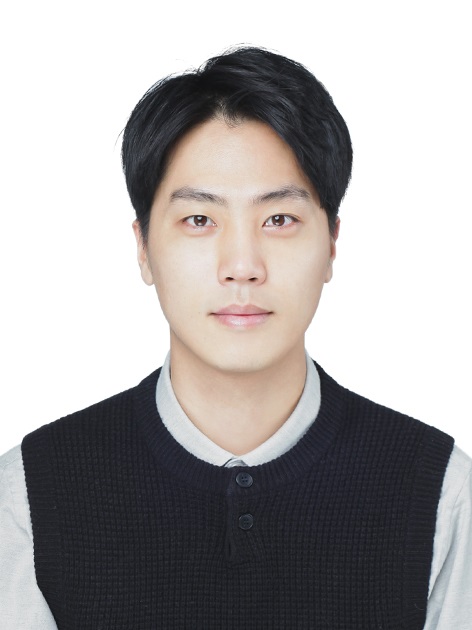
2024-03-19[동문] 최윤석 박사(지도교수 이지형), 한국외국어대학교 Language & AI융합학부 조교수 임용 소프트웨어학과 졸업생(2기) 최윤석 박사가 한국외국어대학교 AI융합대학 Language & AI융합학부 조교수로 2024년 3월부로 임용되었다. 최윤석 박사는 정보 및 지능 시스템 연구실(지도교수 이지형)에서 연구를 진행하며, 소프트웨어학과를 졸업하고, 대학원 소프트웨어플랫폼학과에 석박사통합과정으로 입학하여 2024년 2월 『Learning to Understand Code and Generate Text in Pre-trained Language Models』(지도교수 이지형)로 박사학위를 받았다. 최윤석 박사는 총 14개의 우수 국제 학회 발표 실적(BK/정보과학회 우수학회 12건)과 총 3편의 SCI(E) 논문을 게재하는 등 우수한 성과를 보였다. 최윤석 박사는 자동 코드 생성, 자동 코드 요약, 코드 질문 응답을 위해 대규모 언어 모델을 활용하는 연구에 관심을 가지며, 앞으로도 프로그래밍 교육을 위한 대규모 언어 모델에 대한 연구를 진행할 예정이다.

우홍욱 교수 연구실 (CSI연구실), CVPR 2024 논문 게재 승인
2024-03-07CSI연구실 (지도교수: 우홍욱)의 논문이 인공지능 분야 우수학회인 CVPR 2024 (IEEE / CVF Computer Vision and Pattern Recognition Conference) 에 게재 승인(Accept) 되었습니다. 논문은 24년 6월 미국 시애틀에서 발표될 예정입니다. 논문 “Model Adaptation for Time Constrained Embodied Control” 은 소프트웨어학과 송재현 (석사과정), 유민종 (석박사통합과정) 연구원이 저자로 참여했습니다. 본 연구는 로봇이나 자율주행 차량과 같은 비전 기반 임바디드 (Embodied) 인공지능 에이전트를 위한 추론 지연 시간 제한에 유연한 대응이 가능한 딥러닝 모델 구조인 MoDeC (MoDel Adaptation for constrained embodied Control) 프레임워크를 제안합니다. MoDec을 통해, 학습 시 경험하지 못한 태스크의 즉시성에 따른 추론 지연 시간 제한 (Inference Latency constraint)과 모델이 설치된 제한된 리소스의 다비이스 환경에 맞추어, 임바디드 에이전트는 모델 추론에 관한 Few-Shot 최적 적응이 가능해집니다. 이를 위해, MoDeC은 다중 태스크 모듈 구조와 모듈 구조 상에서 추론 경로를 결정하는 동적 라우팅 네트워크, 그리고 디바이스 환경 최적화를 위한 디바이스 어댑터를 포함합니다 CSI 연구실은 머신러닝, 강화학습, 자기지도학습을 활용하여 네트워크, 클라우드 시스템 최적화 연구와 봇, 드론 자율주행 연구 등을 수행하고 있습니다. 이번 CVPR 2024 논문의 연구는 사람중심인공지능 핵심원천기술사업 (IITP), 한국연구재단 개인기초사업 (NRF), 인공지능대학원, ICT명품인재양성사업의 지원으로 진행 중 입니다. 우홍욱 | hwoo@skku.edu | CSI Lab | https://sites.google.com/view/csi-agent-group

김형식 교수 연구실 (보안공학연구실, SecLab), The Web Conference (WWW) 2024 논문 게재 승인
2024-03-07김형식 교수 연구실 (보안공학연구실, SecLab), The Web Conference (WWW) 2024 논문 게재 승인 보안공학 연구실 (지도교수: 김형식, https://seclab.skku.edu)의 이기호(석사과정), 임채진(석사과정), 진범진(박사과정), 김태영(박사과정) 학생과 김형식 교수가 진행한 "AdFlush: A Real-World Deployable Machine Learning Solution for Effective Advertisement and Web Tracker Prevention" 논문이 웹/데이터 마이닝 분야 최우수 학회 The Web Conference (WWW) 2024 (https://www2024.thewebconf.org)에 게재 승인되었습니다. 사용자의 웹 프라이버시를 지키기 위해 광고 및 개인정보 추적기를 방지하는데에 기존의 탐지 및 차단 시스템은 실제 세계에서 빈번히 발생하는 변조 공격에 취약한 모습을 보입니다. 이를 효과적으로 방어하고 일반화하기 위해 머신 러닝 기법을 활용하여 탐지 성능을 끌어올리고 있으나, 현실적으로 실시간 탐지에는 아직 한계점이 분명합니다. 본 논문은 이러한 문제점을 제시하고, 실제 웹 브라우저 환경에서 실시간 탐지를 통하여 사용자의 개인정보를 지킬 수 있도록 경량화된 프레임 워크를 제안하였습니다. 이를 위해 사용량이 가장 많은 상위 10,000개의 웹 사이트에서 발생한 830,160개의 웹 요청에서 기존 연구에서 다룬 3,323개의 피쳐를 추출하고, 변조 공격에 대한 강건성을 추가하기 위해 533개의 피쳐를 추가했습니다. 해당 데이터셋에 대하여 면밀한 피쳐 공학을 통해 경량화되면서 성능을 발전시킨 모델을 Chrome 확장 프로그램에 탑재하여 실시간 탐지가 가능한 프레임 워크를 개발하였습니다. 일반적인 탐지 성능과 변조 공격에 대한 강건성 모두 최신 연구 기법 (AdGraph, WebGraph, WTAGraph)을 상회하였으며, 6개월 동안 진행한 longitudinal 성능 분석에서도 F1 score 0.97점 이상을 기록하여 장기간 재학습 없이도 효과적인 탐지 성능을 선보였습니다. Abstract - Conventional ad blocking and tracking prevention tools often fall short in addressing web content manipulation. Machine learning approaches have been proposed to enhance detection accuracy, yet aspects of practical deployment have frequently been overlooked. This paper introduces AdFlush, a novel machine learning model for real-world browsers. To develop AdFlush, we evaluated the effectiveness of 883 features, ultimately selecting 27 key features for optimal performance. We tested AdFlush on a dataset of 10,000 real-world websites, achieving an F1 score of 0.98, thereby outperforming AdGraph (F1 score: 0.93), WebGraph (F1 score: 0.90), and WTAgraph (F1 score: 0.84). Additionally, AdFlush significantly reduces computational overhead, requiring 56% less CPU and 80% less memory than AdGraph. We also assessed AdFlush’s robustness against adversarial manipulations, demonstrating superior resilience with F1 scores ranging from 0.89 to 0.98, surpassing the performance of AdGraph and WebGraph, which recorded F1 scores between 0.81 and 0.87. A six-month longitudinal study confirmed that AdFlush maintains a high F1 score above 0.97 without the need for retraining, underscoring its effectiveness.


 발전기금
발전기금